
The New universalmanifest.net
The Universal Manifest website has been rebuilt from the ground up with 15 use-case walkthroughs, a standards composition page, interactive tools, and the v0.3 spec published in full.
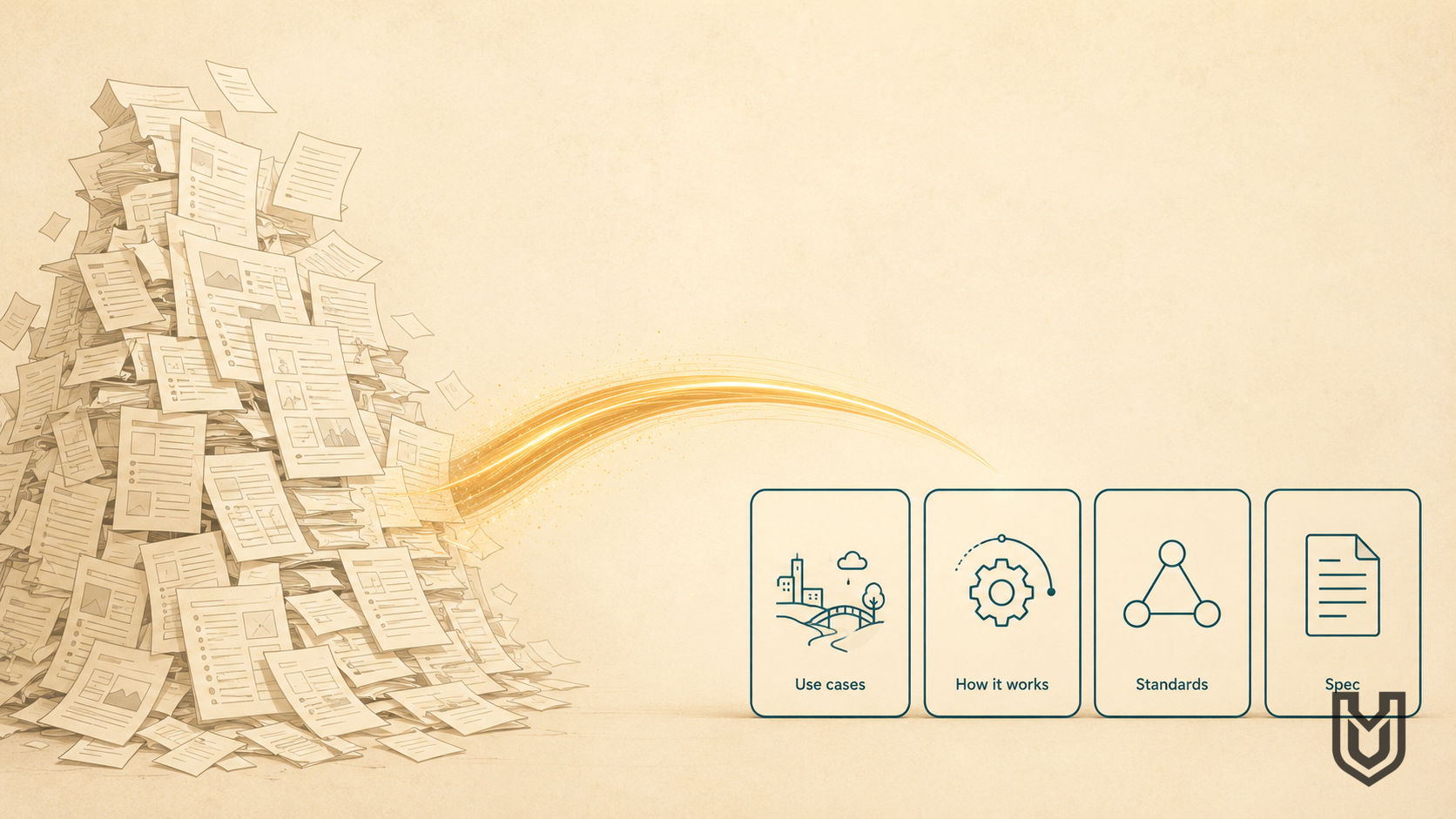
The Universal Manifest website has been completely rebuilt. The previous site was 83 pages of accumulated documentation that had grown without a clear structure. The new site is focused: explain what UM is, show how it works, prove it with live tools.
What is on the new site
15 use-case walkthroughs. Each one puts you in a specific moment: crossing a border, joining a new platform, proving your age without revealing your birthday, delegating authority to an AI agent. The use cases show what the manifest does in situations people actually encounter.
How It Works. A technical walkthrough of the evaluation sequence, selective disclosure, sealed entries, and the evaluation contract. Written for CTOs and architects who need to understand the mechanism before committing engineering time.
Standards Composition. UM is a composition layer. It works alongside DID, Verifiable Credentials, OID4VP, HPKE, and mDL. The standards page shows what each standard does, what UM carries or composes with, and what UM leaves alone.
The specification, published on-site. All three versions (v0.1, v0.2, v0.3) are available directly on the site in the same format used by major standards bodies. No separate PDF to download, no external link to chase.
A roadmap with evidence gates. v0.4 (production-candidate) is driven by evidence, not a calendar. The roadmap names the six gates and shows current status against each one.
What was removed
83 legacy documentation pages were archived. Redundant explanations, internal-facing content, and outdated diagrams are gone. The site serves implementers, evaluators, and people trying to understand what Universal Manifest is and whether it applies to their work.
What comes next
Content refinements continue: vocabulary alignment across pages, the “What is a Universal Manifest?” explainer being tightened, and forward-looking content tied to the OMA3 standardization process.
Explore the site. Start with the use cases, then read how it works. If you are ready to implement, the spec is here.